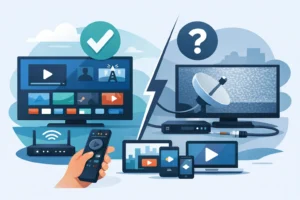
A playoff game is not the moment to find out your stream buffers, your app does not support your TV, or your plan does not include the channel carrying the event. A good guide to premium sports streaming access starts with the details that affect game day: the leagues you watch, the screens in your home, the quality of your internet connection, and the reliability of the provider behind the stream.
For sports fans, cable has become expensive and streaming has become fragmented. One service has local games, another has national coverage, and a third may carry a single must-watch event. The right setup should reduce that clutter without forcing you into complicated hardware, surprise fees, or unreliable feeds.
Start With the Sports You Actually Watch
Do not choose a sports streaming plan based on a giant channel count alone. More channels can be valuable, especially for households with different interests, but the real question is whether the plan covers your weekly viewing habits.
Make a short list of the leagues, teams, and events that matter most. NFL fans may need national broadcasts, regional games, pregame coverage, and RedZone-style programming. NBA and NHL viewers should look for regular-season games, playoffs, studio shows, and the regional or national networks that carry their preferred teams. UFC fans need dependable access to fight nights, prelims, and event coverage.
Local channels matter too. Major games often air on local affiliates, and Canadian or French-language viewers may also want Quebec-focused stations and regional programming. A provider can promote premium sports coverage and still leave a gap in the exact channel you expect to watch. Check the current channel lineup before subscribing, particularly for live events with exclusive broadcast rights.
Sports rights change by league, market, and season. No service can honestly guarantee every game for every team in every location. Blackouts, regional restrictions, and event-specific licensing can apply. A dependable provider should be clear about what its plan includes rather than making vague promises about “all sports.”
What Premium Sports Streaming Access Should Include
Premium access is not just a label for a larger library. It should mean that live sports are easy to find, stable when demand is high, and available on the devices you use every day.
First, look for live TV coverage rather than only on-demand highlights. Sports are time-sensitive. A replay is useful, but it does not replace watching the opening kickoff, a buzzer-beater, or a title fight as it happens. An organized electronic program guide also saves time. You should be able to locate the right channel quickly instead of scrolling through hundreds of names minutes before the event begins.
Picture quality is the next test. HD is the practical minimum for sports because fast movement exposes poor compression immediately. A 4K-capable setup can look excellent when the event, channel, device, and internet connection all support it. Still, 4K availability varies. Treat it as a valuable feature, not a reason to ignore stability, channel selection, or device support.
A strong sports plan should also offer a wider entertainment mix. In a real household, sports are only part of the viewing schedule. Live news, kids’ programming, movies, series, international channels, and local content make a subscription easier to justify across the month, not just on game nights.
Check Your Devices Before You Pay
The best sports plan is useless if it only works on the television no one uses. Before choosing a service, confirm its supported platforms and the number of simultaneous connections included with the plan.
Many viewers want access on a Firestick, Android TV device, Smart TV, phone, tablet, or IPTV box. Others prefer dedicated hardware such as Formuler boxes, YokaTV, or compatible STB setups because they want a traditional TV-style experience with a remote and guide. There is no single best option. A Firestick is convenient and affordable, while a dedicated box can be a better fit for a living-room setup used every day.
Multi-device access deserves special attention. One person may be watching an NBA game in the living room while another streams a movie in a bedroom or checks a hockey game on a tablet. If your plan supports only one connection, that flexibility disappears immediately. Choose a plan based on the number of active streams your household needs, not just the number of devices you own.
For the smoothest experience, use a wired connection when possible. If Wi-Fi is your only option, position the router well, reduce interference, and avoid placing the streaming device behind a TV or inside a cabinet. Fast internet helps, but consistency matters more than a headline speed test. A stable connection is what keeps the fourth quarter watchable.
Test Reliability Where It Counts
Sports streaming receives its hardest test during a major live event. Traffic spikes at kickoff, puck drop, and pay-per-view main events. A service that works well on a quiet weekday afternoon may behave differently during a championship game.
Look for a provider that prioritizes stable delivery, responsive support, and fast activation. Anti-freeze technology can be a useful feature, but the result matters more than the phrase: channels should load quickly, maintain a clear picture, and recover reasonably if your network briefly drops.
A trial can be the most practical way to evaluate a service. Test it during the hours you normally watch, on the device you plan to use, and with more than one stream if your household needs it. Open live channels, switch between sports and local stations, check the guide, and see how quickly the app responds. This gives you better information than a channel list alone.
Support is part of reliability. When an app needs setup help or a device update changes the login process, you want clear answers without a long wait. Around-the-clock support is especially useful for late games, weekend events, and households watching across different time zones.
Compare the Full Cost, Not Just the Monthly Price
A low monthly price gets attention, but a premium sports setup should be evaluated over the full term. Compare subscription duration, the number of simultaneous devices, activation terms, hardware needs, and any separate event or official league pass costs that may apply.
Longer plans can offer better value for viewers who know they will use the service throughout the year. Shorter plans make sense if you want to test compatibility or if you only follow a specific season. The right choice depends on how often you watch live TV beyond sports.
Also consider the cost of subscription stacking. Paying for several standalone sports, movie, and live TV platforms can become more expensive than cable while still leaving channels missing. A consolidated live TV option can simplify the setup, provided it offers the programming, performance, and authorized access you need.
Choose services that respect applicable broadcasting rights and the terms available in your location. If a deal sounds impossible, the channel source is unclear, or the provider cannot explain basic account and support details, move on. The cheapest option is not a value if it disappears during the season.
Build a Setup That Works Every Game Night
The simplest winning setup is usually a supported device, a stable internet connection, and a plan sized for your household. Do not overcomplicate it with unnecessary equipment or apps you will never open.
PureVisionHD is designed for viewers who want broad live TV, sports, movies, and series access with device flexibility and quick activation. Before selecting any plan, verify the current lineup and choose the number of connections that matches how your household watches.
Keep your device updated, restart your router before a major event if the connection has been unstable, and log in early rather than at the opening whistle. Those small habits prevent the most common game-night problems.
The right service should make sports feel simple again: turn on your preferred screen, find the game, and enjoy it without building your evening around cable contracts or a pile of separate subscriptions.