Cable bills keep climbing, sports keep getting split across apps, and most households are paying for more subscriptions than they meant to. That is why the question of iptv vs streaming services is no longer just about technology. It is about cost, convenience, and whether your setup actually gives you the channels, games, and on-demand content you want without making you manage five different logins.
For viewers in the US and Canada, especially sports fans and families that want live TV, this comparison matters fast. Some people want the familiar feel of channel surfing with a big lineup. Others care more about original shows, app simplicity, or household name platforms. The better option depends on how you watch, what you watch most, and how much friction you are willing to tolerate.
IPTV vs streaming services: the real difference
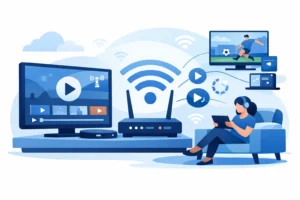
At a basic level, IPTV delivers television over the internet in a channel-based format. It is built to feel closer to cable, but without the cable infrastructure. You open an app or device, load your playlist or service, and access live TV channels, sports, movies, and series through an internet connection.
Streaming services usually refer to app-based platforms like the ones people subscribe to one by one for movies, shows, and sometimes live TV. These services are often strong in originals and on-demand libraries, but they are also fragmented. One app has one show, another app has one league, and another charges extra for live channels.
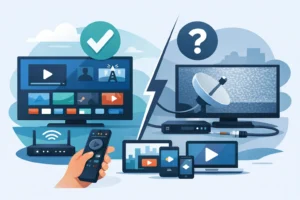
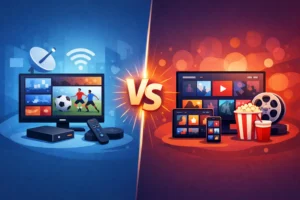
That is the practical split. IPTV is usually about consolidated access and live channel volume. Mainstream streaming services are usually about branded apps, exclusive content, and a cleaner retail experience.
If you watch live TV, IPTV usually has the edge
This is where the difference becomes obvious. If your week includes local channels, 24/7 news, live sports, international programming, and regular channel flipping, IPTV fits that behavior better. You are not opening six separate apps to find what is on. You are using one service built around live television.
For many households, that matters more than people admit. The promise of streaming was simplicity, but for live content it often became the opposite. Sports moved behind separate packages. Regional access became inconsistent. Local channel coverage depends on the platform, the market, and the plan.
An IPTV setup is often better for viewers who want one interface for a large range of live channels. That includes sports-heavy users, multilingual homes, and anyone replacing cable without wanting a stripped-down experience.
Streaming services still win in some areas
Mainstream streaming services are not weak. They are just optimized for different priorities. If you care most about exclusive original shows, polished user interfaces, and app-store convenience, streaming platforms still have clear advantages.
They also tend to be easier for casual viewers who only want a few specific brands. If someone mainly watches prestige series, family movies, and a handful of recommended titles, paying for two or three standalone apps may feel simpler than learning a new TV setup.
There is also a trust factor. Big-name streaming apps are familiar. Billing is standardized. Installation is quick. For people who do not care about channel count or live sports depth, that can be enough.
Price is where the comparison gets serious
The biggest reason people start comparing IPTV vs streaming services is money. A single streaming app can look cheap. Three or four apps still feel manageable. Then live TV gets added, sports require another package, and premium content means one more monthly charge. Suddenly the total looks a lot like cable again.
That is the trap. Streaming services often seem affordable until you stack them. Most households do stack them. One person wants drama series, another wants kids content, someone else wants sports, and now the monthly total keeps growing while the viewing experience becomes more fragmented.
IPTV usually makes its case through consolidation. Instead of paying separately for live TV, sports access, movie content, and international channels, users often get broader coverage in one subscription. That does not automatically make every IPTV option better, but it does make the value equation much stronger for heavy viewers.
If your goal is to reduce both monthly cost and subscription clutter, IPTV is often the more practical move.
Sports fans should pay close attention
Sports are where many mainstream streaming setups start to break down. One league sits on one app, another game is blacked out locally, and a playoff matchup appears on a channel you do not have. That is frustrating if live sports are not optional in your home.
IPTV is often more attractive because it is built around channel access at scale. That means sports fans can follow major leagues, regional feeds, pay-per-view events, and specialty coverage without rebuilding their subscription stack every season. For NFL, NBA, NHL, UFC, and other high-demand content, this kind of access is often the difference between watching easily and constantly chasing availability.
If sports are central to your entertainment budget, convenience matters as much as price. The setup that gets you to the game faster usually wins.
Device support and setup are closer than people think
One old assumption is that streaming services are easy and IPTV is complicated. That is not always true anymore. Good IPTV services now work across Smart TVs, Firestick, Android devices, iPhone, tablets, IPTV boxes, and STB-style setups. For many users, installation is no harder than downloading an app and entering login details.
Streaming services still have an advantage in pure retail familiarity. They are made for mass-market app stores, and support docs are usually simple. But IPTV has become much more plug-and-play, especially for users with compatible hardware like Formuler boxes or common smart streaming devices.
So the real question is not whether IPTV can work on your devices. It usually can. The real question is whether the provider offers stable performance, responsive support, and activation that does not waste your time.
Reliability depends more on the provider than the format
This part gets overlooked. People often compare formats when they should be comparing execution. A bad streaming app buffers. A bad IPTV service buffers. A strong provider with stable infrastructure, anti-freeze optimization, and good support can outperform a bigger brand that is overloaded during live events.
That means the reliability question is less about labels and more about service quality. Does the provider activate quickly? Does it support the devices you already own? Does it maintain stable streams for peak sports hours? Can you get help when something needs setup or troubleshooting?
For buyers evaluating IPTV, these are not small details. They are the product.
Content depth changes the decision
If your entertainment needs are narrow, mainstream streaming can be enough. If you only care about a few original series and occasional movies, there is no reason to overcomplicate your setup.
But many households are not narrow. They want live channels, sports, movies, kids content, regional coverage, and maybe international programming too. They may also want Quebec-focused channels or multilingual access that standard US streaming bundles do not prioritize well.
That is where IPTV becomes more compelling. It is designed for range. Instead of forcing you to choose between local TV, premium sports, and on-demand content, it aims to bring them together in one place.
For households that share one screen ecosystem across different preferences, that matters a lot.
Which option makes more sense for most cord-cutters?
If you are replacing cable and still want a cable-like experience, IPTV is usually the better fit. It delivers more of what cable viewers actually miss: live channels, sports, broad selection, and one service that does not make entertainment feel scattered.
If you are a light viewer who mostly watches a few app-exclusive shows, mainstream streaming services may be enough. They are clean, recognizable, and easy to rotate month by month.
But for value-conscious users who want more content, more live TV, more sports, and fewer monthly subscriptions to manage, IPTV often comes out ahead. That is especially true for North American viewers who are tired of paying more while getting less in one place.
A service like PureVisionHD makes the appeal clear: fast activation, broad device support, large channel volume, premium sports access, and a setup built for people who want to start watching instead of piecing together another stack of apps.
The right choice is the one that matches your viewing habits, not the one with the loudest ads. If your goal is simple, reliable access to the content you actually watch every week, follow the setup that cuts the friction first.