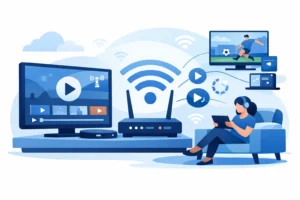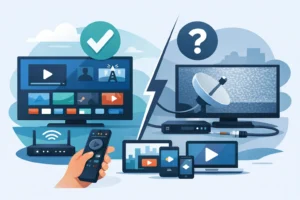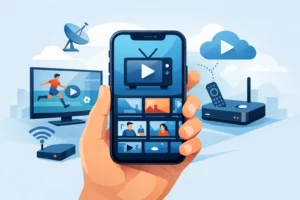
Your Smart TV should not feel like a compromise. If you are still bouncing between overpriced cable, limited apps, and sports packages that somehow miss the games you want, the best IPTV for Smart TV starts with one thing: getting all your live TV and on-demand content in one place, with stable playback and fast setup.
That sounds simple, but not every IPTV service works well on a Smart TV. Some have big channel counts and weak performance. Others look cheap up front, then fall apart on live sports, local channels, or app support. If you want a setup that actually replaces cable, you need to judge IPTV by how it performs on your screen, in your home, during peak hours.
What makes the best IPTV for Smart TV?
The answer is not just channel volume. A service can advertise 20,000 channels and still give you a frustrating experience if the streams freeze, the app is clunky, or the lineup is packed with channels you will never watch.
The best option for a Smart TV combines four things: stable live TV, fast app compatibility, strong sports and movie coverage, and support that responds when something needs fixing. For most households, that matters more than inflated numbers on a landing page.
Smart TV users also need a provider that works across popular platforms. That includes Samsung and LG setups where app choice can be more limited, and Android TV or Google TV systems where installation is usually easier. If a service only works well on one device type, it is not a strong long-term choice.
Best IPTV for Smart TV buyers should focus on performance first
A Smart TV is usually the main screen in the house. That means the service has to handle prime-time viewing, live sports, and family use without constant buffering. This is where many lower-end IPTV services lose people fast.
Performance starts with stream stability. Anti-freeze technology, reliable servers, and clean channel feeds matter more than flashy promises. If you mainly watch NFL, NBA, NHL, UFC, or live news, lag and dropouts will ruin the value instantly. Sports fans especially need consistency because live events expose every weakness in a provider’s infrastructure.
Picture quality matters too, but it depends on your internet speed and the TV itself. HD should be the baseline. 4K is a real advantage if the provider offers true high-quality feeds instead of compressed streams labeled as 4K. If your connection is average, a provider with stable HD is often the better choice than one that pushes higher resolution but buffers under pressure.
App compatibility can make or break the experience
This is where Smart TV shopping gets practical. Some viewers assume any IPTV service will work the same on every television. It will not.
If you use Android TV, Google TV, or a compatible IPTV box, you usually get more flexibility. Apps install faster, navigation is smoother, and playlist or portal setup is more straightforward. Samsung and LG Smart TVs can still be excellent options, but they often depend on the apps available in their own ecosystems. That means you should always check whether the provider supports the app method your TV uses.
The best IPTV for Smart TV should work beyond the television too. That matters because many households want the same subscription on a Firestick, tablet, or phone. Multi-device flexibility makes the service more practical and usually gives you better value over time.
If you want the easiest setup possible, a dedicated IPTV box can still be the better route. Smart TVs are convenient, but some users prefer a box like Formuler or an STB-compatible setup because the interface tends to be faster and more IPTV-focused. It depends on whether you want fewer devices or a smoother IPTV-specific experience.
Content quality matters more than raw channel count
A lot of buyers get pulled in by huge numbers. More channels sound better, but volume alone does not make a service worth paying for.
A better test is whether the provider covers the content you actually watch. For North American viewers, that usually means major US and Canadian live channels, premium sports, updated movies, full series sections, and reliable local options. For many Canadian households, Quebec and multilingual channel access can be a deciding factor too.
A strong IPTV service should feel complete. You should not need one service for sports, another for movies, and a third for local channels. That is the whole point of replacing cable and reducing subscription sprawl.
Movie and series libraries also need regular updates. Some providers advertise on-demand content but leave categories outdated or poorly organized. If you care about current releases and binge-worthy series, fresh updates are part of the value.
Support is not optional
People usually think about support after something goes wrong. That is backward.
If activation is delayed, app setup gets confusing, or one device works differently than another, support becomes the difference between a smooth start and wasted money. The best IPTV providers for Smart TV offer quick activation and real help, not vague replies hours later.
This matters even more for households that are not trying to troubleshoot every setting themselves. Many users want plug-and-play simplicity. They want to subscribe, install the app, log in, and start watching. A provider built around instant activation and 24/7 support has a clear edge because it reduces friction from the first minute.
How to compare IPTV services without wasting time
Start with your screen and your viewing habits, not the provider’s biggest claim. If your Smart TV is the main entertainment hub, ask a few direct questions.
Does it support your TV’s app setup? Does it offer stable live sports? Are local and premium channels included? Can you use it on more than one device? Is the on-demand library updated often? Can support help quickly if setup does not go as planned?
Those questions will tell you more than a long list of generic features. They also help you avoid paying for a service that looks impressive but does not fit your actual use.
Free or low-cost trials can help, especially if you want to test navigation quality and stream stability on your own television. A service may perform well on a phone and poorly on a Smart TV app, so testing on the main screen is the only result that matters.
Who usually gets the most value from IPTV on a Smart TV?
Cord-cutters are the obvious group, but they are not the only ones. Sports fans get major value when one plan covers league games, fight nights, and event channels without stacking multiple subscriptions. Families benefit when live TV, kids’ content, movies, and series sit in one interface instead of being spread across different apps.
Multicultural households also tend to get more from IPTV because broader international channel access is often easier to find in one service than through traditional cable bundles. And if you are in Canada or watch both Canadian and US programming, having strong regional coverage can save a lot of frustration.
That is where a provider like PureVisionHD fits naturally for buyers who want broad North American content, sports depth, quick activation, and compatibility across Smart TVs, streaming devices, and IPTV boxes. The appeal is straightforward: more content, less setup friction, and fewer monthly bills pulling in different directions.
When a Smart TV alone is enough – and when it is not
For many users, a Smart TV app is all they need. If the app runs well, your internet is solid, and the provider is stable, that setup is simple and effective. It keeps the living room clean and gets you straight to the content.
But there are trade-offs. Some Smart TV interfaces feel slower than dedicated streaming devices. Remote navigation can also be less efficient for large IPTV menus. If you are a heavy user, especially for sports and daily live TV, adding a Firestick, Android box, or Formuler device may improve speed and usability.
That does not mean a Smart TV is the wrong choice. It just means the best setup depends on how often you watch, how many people are using the service, and whether convenience or performance is your top priority.
The real standard for the best IPTV for Smart TV
The best service is the one that feels easy after day one. It loads fast, plays reliably, includes the channels you care about, and works on the devices already in your home. It should save you money compared to cable while giving you more to watch, not more to troubleshoot.
If you are comparing providers, think beyond the sales pitch. Look for stable streams, strong sports and local coverage, broad app support, updated on-demand content, and fast activation. Once those pieces are in place, your Smart TV stops being another screen with scattered apps and starts working like the entertainment center it was supposed to be.
The right IPTV setup should make your nights simpler – one screen, one service, and far fewer compromises.