That cable bill usually looks manageable at signup. Three months later, the promo ends, the box fee shows up, the sports package gets added, and suddenly the total is nowhere near the headline price. That is why iptv versus cable costs is not just a pricing question. It is a value question, a flexibility question, and for a lot of households, a frustration question.
If you are trying to replace cable, the real comparison starts with what you actually watch and what you actually pay. Live sports, local channels, movies, kids content, French channels, multiple TVs, and on-demand access all change the math. A cheap option that forces you to add three more subscriptions is not really cheap. A higher monthly price that covers everything in one place can end up costing less over time.
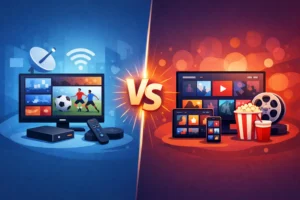
IPTV versus cable costs: the real difference
Cable pricing is built around bundles, equipment, and service tiers. On paper, that can look simple. In practice, many customers end up paying for channels they do not want, renting hardware they do not own, and accepting contracts or promo pricing that rises later. If you want premium sports, more boxes, DVR, or specialty international channels, the total keeps climbing.
IPTV usually works differently. Instead of paying for a technician visit, cable box rental, regional package upgrades, and extra room fees, you are paying primarily for access. That changes the cost structure in a big way. For many viewers, especially homes that already have solid internet, IPTV removes several of the old cable charges that make traditional TV expensive.
That does not mean IPTV is always cheaper in every single setup. If someone only wants a very small channel package, watches almost no sports, and already has a discounted telecom bundle, cable can still make sense. But for households that want broad content, multiple devices, and a cleaner path to live TV without stacking extras, IPTV often wins on total monthly cost.
What cable really costs month to month
The advertised cable number is rarely the final number. Most people know this from experience. You start with a base package, then the add-ons begin.
There is the equipment rental for each TV. There may be DVR charges, regional sports fees, broadcast fees, installation costs, taxes, and package upgrades for channels that should arguably be included in the first place. If you have a family with more than one television, that hardware cost alone can become a recurring penalty.
Then there is the promo trap. A cable provider might advertise a low monthly rate for new customers, but once that period ends, the bill jumps. That is one of the biggest pain points with traditional service. The first bill gets your attention. The seventh bill gets your frustration.
For sports fans, cable gets even more expensive. NFL, NBA, NHL, UFC, and premium event coverage are often split across upgraded channel tiers or paired with separate streaming services. At that point, you are not comparing cable to one alternative. You are comparing cable plus extras against a more consolidated option.
Where IPTV saves money
With IPTV, the savings usually come from fewer layers. No technician appointment. No long hardware rental cycle. No paying for every room like it is a separate account. No rigid channel structure built for older delivery systems.
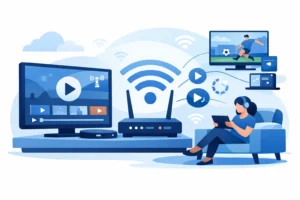
A good IPTV service is built for modern viewing habits. People watch on smart TVs, Firestick, Android devices, IPTV boxes, tablets, and phones. That device flexibility matters because you are not locked into one piece of provider hardware sitting under one screen.
There is also the channel volume issue. If a service includes live TV, sports, movies, series, and international or regional content in one subscription, the total value is easier to justify. That is especially true for multicultural households and viewers who want both mainstream North American programming and niche language or regional options.
For a lot of users, IPTV is not just cheaper than cable. It is cheaper than cable plus the streaming services they had to add because cable alone was not enough.
IPTV versus cable costs for sports fans
Sports are often where the decision gets made.
Cable can still work for sports, but it tends to get expensive fast. You may need a higher-tier package just to access the channels that carry the games you actually care about. If your household follows multiple leagues, the costs stack up quickly. Add pay-per-view habits or premium event access and the monthly entertainment budget starts looking bloated.
IPTV appeals to sports fans because it can put more of that coverage under one roof. That matters if your week includes NFL on Sunday, NHL during the week, NBA at night, and UFC on weekends. Instead of juggling channel upgrades and separate apps, you are paying for access in a format that fits how people already watch.
Of course, the service quality matters. Low price means nothing if streams freeze during overtime or cut out during a title fight. That is why cost should never be judged in isolation. Stability, stream quality, and support matter just as much as the monthly fee.
Equipment, setup, and hidden friction
This is where cable feels old fast.
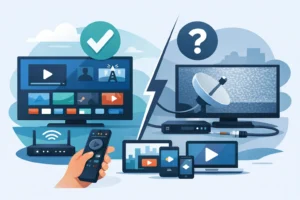
Cable still often depends on provider-controlled equipment, technician scheduling, and fixed-room setup logic. Even when the monthly price looks competitive, the experience can feel restrictive. If you want to move between rooms, watch on mobile, or avoid another rented box, you run into limitations.
IPTV is built around compatibility. If it works on the devices you already use, setup becomes faster and cheaper. That matters to customers who want instant activation instead of waiting days for an appointment. It also matters to homes that do not want extra wiring or another piece of hardware for every screen.
Some users still prefer a dedicated box for a more traditional TV feel, and that is fair. But even then, the setup tends to be lighter and more flexible than legacy cable. The point is not that every IPTV setup is identical. The point is that you usually have more control over how and where you watch.
When cable can still make sense
A fair comparison needs some honesty.
Cable can still be a reasonable option for people who want a very conventional experience, only need a limited channel lineup, and are satisfied with a bundle tied to internet or phone service. Some customers value the familiar interface and the perception of a single large provider handling everything.
There is also the internet dependency issue. IPTV relies on a stable connection. If your home internet is weak, inconsistent, or overloaded, your viewing experience can suffer. Cable does not eliminate every service issue, but it may feel more predictable in households with poor network conditions.
So yes, it depends. If your internet is strong and you want more content, more flexibility, and fewer equipment-based charges, IPTV usually has the edge. If your viewing habits are minimal and your cable bundle is heavily discounted, the gap may be smaller than expected.
What smart buyers should compare before switching
When people compare iptv versus cable costs, they often focus too much on the first price they see. A better approach is to compare the full monthly picture.
Start with channel access. Are you paying extra for sports, local stations, French-language content, or premium movie channels? Then look at device use. How many screens can watch at once, and what does it cost to expand? After that, consider setup speed, hardware needs, and whether support is available when something needs attention.
The best-value option is not always the cheapest line item. It is the one that covers the most of what you actually use without turning every feature into an add-on.
That is why many cord-cutters in Canada and across North America are moving toward services that prioritize content volume, fast activation, and broad device support. A provider like PureVisionHD fits that shift because the offer is simple: more live channels, strong sports coverage, current movies and series, multi-device options, and less billing friction than old-school cable structures.
If you are tired of promo pricing games, rented boxes, and paying more to watch less, the better question is not whether cable still works. It is whether it still makes financial sense for the way you watch now. The right TV service should feel easy to start, easy to use, and a lot less expensive than the bill you are trying to escape.